What Is Installation and Commissioning (I&C) in a Solar Power Plant?
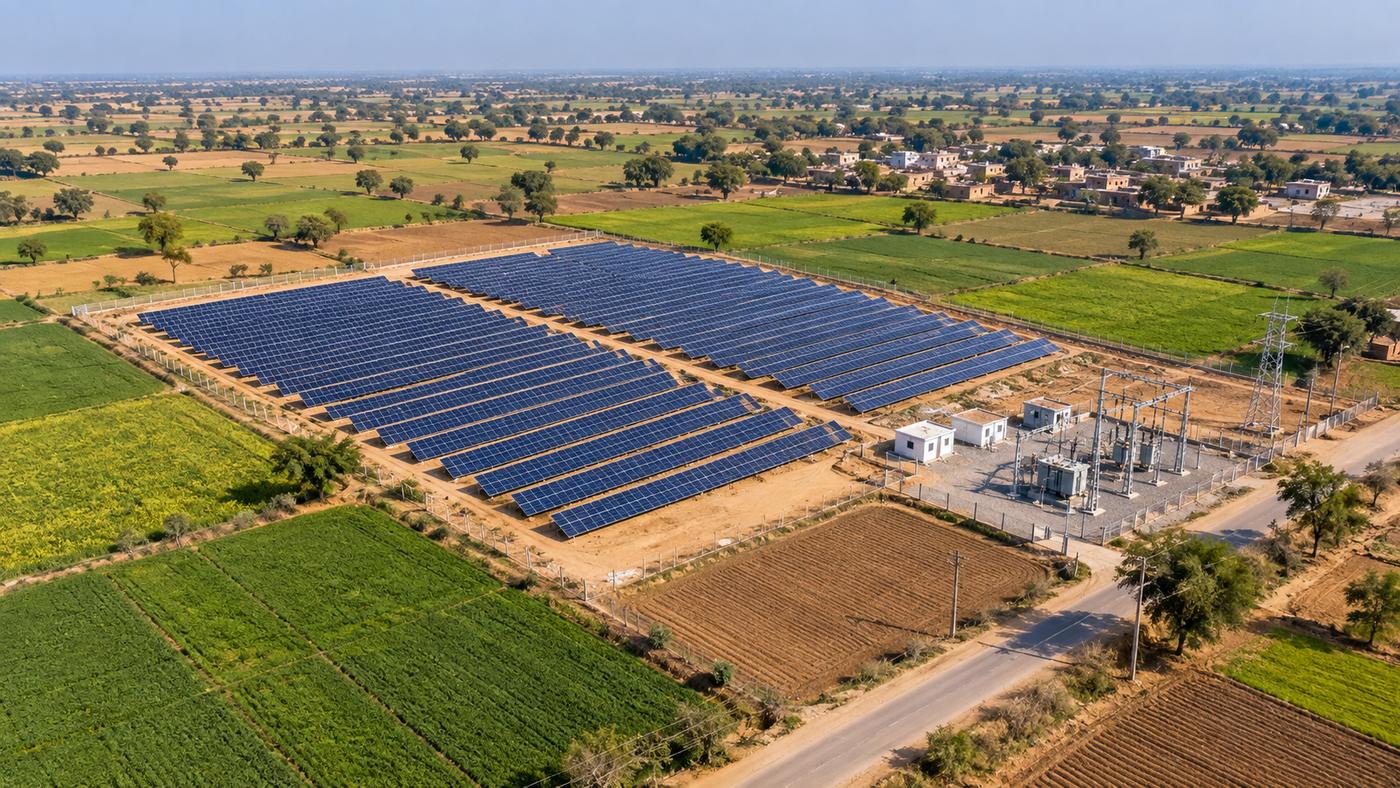
Every solar power plant starts as a drawing and a piece of empty land. Installation and commissioning (I&C) is the site work that turns that drawing into a plant that generates power. In a utility-scale solar project, I&C usually decides whether the plant is commissioned on time, and whether it passes inspection the first time.
This guide explains what solar installation and commissioning includes, how it fits into a solar EPC project, and what developers and EPC companies should look for in an I&C contractor.
What does solar installation and commissioning mean?
Installation is the physical construction of the plant on site: piling, mounting structures, solar modules, cables and connections. Commissioning is the set of tests and checks that prove the plant is safe and works as designed, before it is connected to the grid and handed over.
Together, installation and commissioning cover everything between "materials delivered to site" and "plant ready for inspection".
The stages of solar installation and commissioning
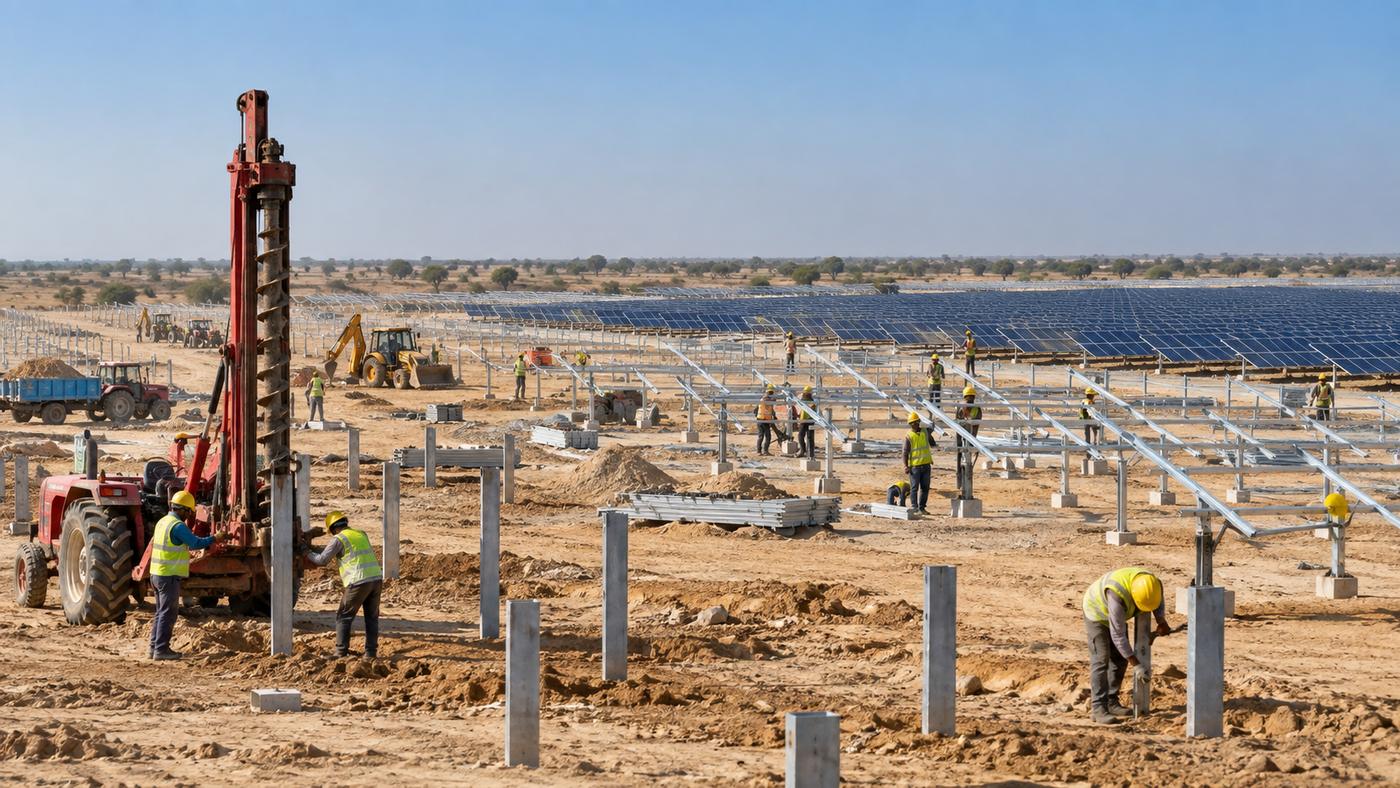
On a ground-mounted, utility-scale solar power plant, I&C normally follows eight stages:
- Mobilisation — the team, machines and site office are set up, and every worker gets a safety induction.
- Survey and layout — reference points are fixed and every pile position is marked as per the approved drawings.
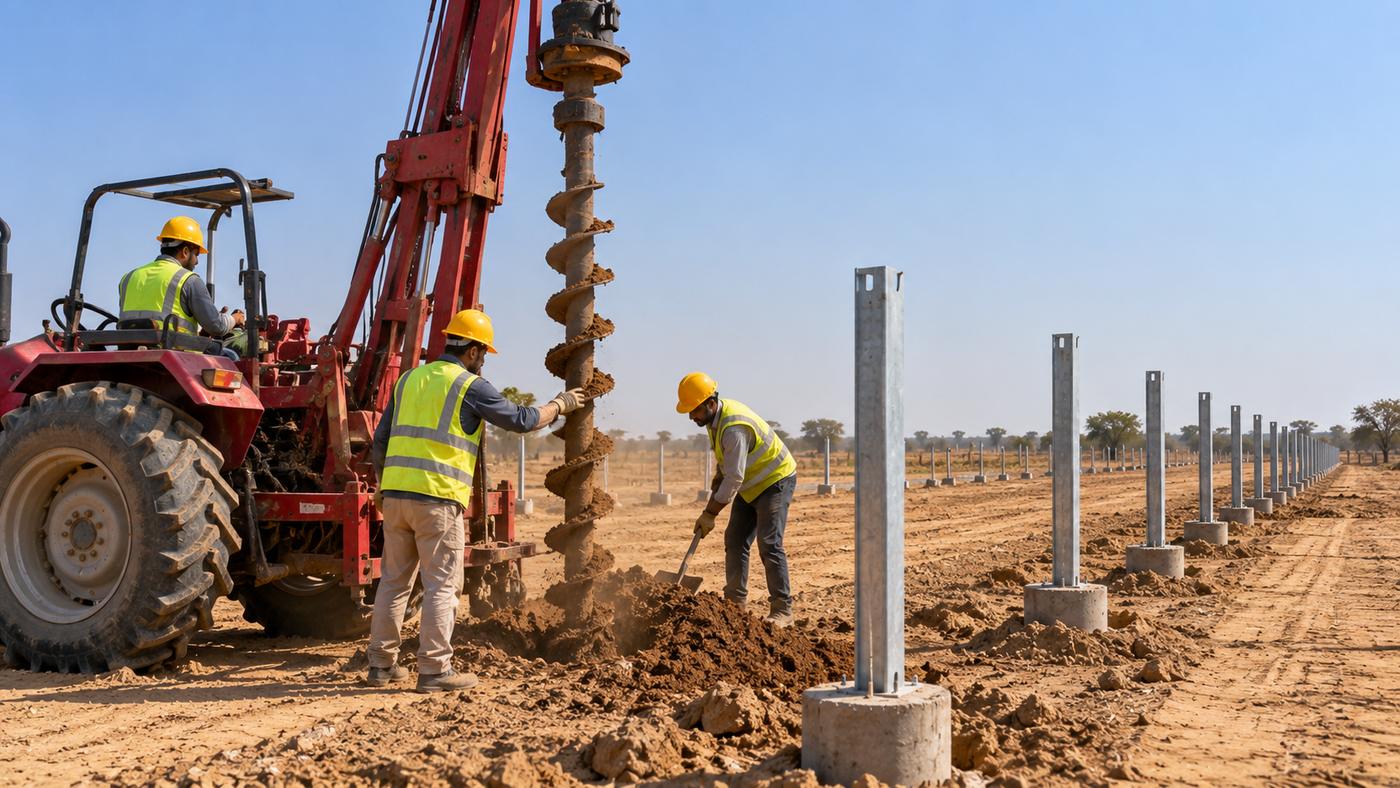
- Piling and foundations — holes are augered or piles are driven, set to line and level, and concreted where required.
- Module mounting structure (MMS) erection — steel structures are fixed on the piles and aligned to the design tilt.
- Solar module installation — modules are handled carefully and clamped to the structures at the specified torque.
- DC and AC cabling — trenching, cable laying, connector crimping, string combiner box and inverter connections, and earthing.
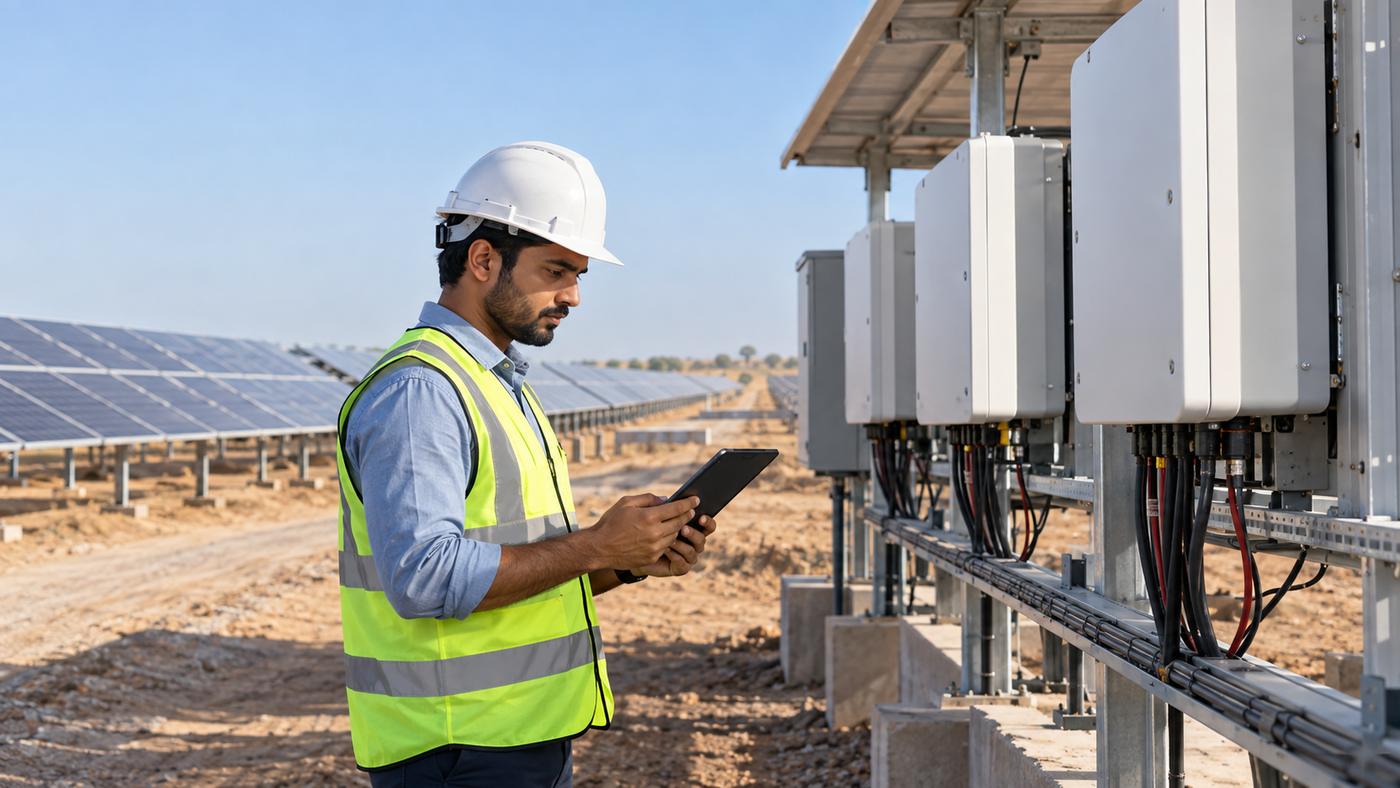
- Testing and commissioning — insulation resistance, string voltage and polarity, earth resistance, IV curve and thermography tests, plus inverter and SCADA checks.
- Handover — punch points closed, test reports and records handed over, plant ready for client and third-party inspection.
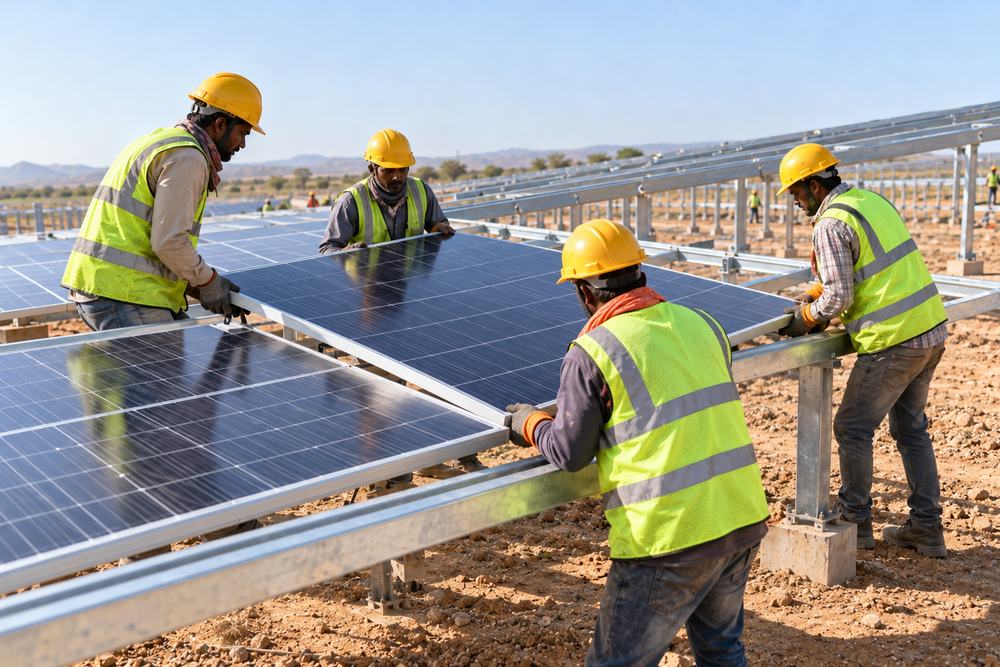
You can see how we run each of these stages on our execution process page.
How I&C fits into a solar EPC project
EPC stands for Engineering, Procurement and Construction. In a solar EPC contract, one company is responsible for designing the plant, buying the equipment and building it. Installation and commissioning is the "construction" part of EPC.
On large projects, EPC companies and developers often hand over I&C to a specialist contractor. The EPC company keeps design and procurement, and the I&C contractor brings the site team, equipment and execution experience. We explain the difference in detail in Solar EPC vs I&C contractor.
Civil, mechanical and electrical scope
| Package | Typical work |
|---|---|
| Civil | Site survey, piling, pile foundations, trenching, drains and civil works |
| Mechanical | Module mounting structure erection, alignment, bolt torquing, module installation |
| Electrical | DC and AC cabling, string combiner boxes, terminations, earthing |
| Testing and commissioning | Pre-commissioning tests, inverter and SCADA checks, documented handover |
An I&C contractor can take the full scope or a single package, for example only piling and civil works.
Why I&C decides your commissioning date
Most solar project delays do not come from design. They come from the site: work that fails inspection and has to be redone, machines that arrive late, and labour that does not turn up. Every day of delay means lost generation and, often, liquidated damages under the contract. You can estimate the loss for your own plant with our delay cost calculator.
How to choose a solar I&C contractor
- In-house team: is the site team on the contractor's own payroll, or subcontracted again?
- Own equipment: does the contractor own tractors, piling augers and excavators, or depend on hired machines?
- Quality system: does it test and record every stage, from concrete cubes to insulation resistance?
- Safety: is there a dedicated safety supervisor, induction, PPE and daily toolbox talks?
- Mobilisation time: how quickly can the team reach your site after the work order?
- Experience: has the team worked on utility-scale solar projects of a similar size?
Frequently asked questions
What is I&C in solar?
I&C stands for installation and commissioning. It is the site work that builds a solar plant, from piling and structures to modules and cables, and the tests that prove the plant is ready for grid connection and handover.
Is I&C the same as EPC?
No. EPC covers engineering, procurement and construction. I&C is the construction and commissioning part of EPC, and is often given to a specialist contractor.
How long does installation and commissioning take?
It depends on plant size, site conditions and team strength. A contractor with its own team and equipment, and good planning, can move much faster than one depending on hired resources.
What tests are done during solar commissioning?
Common tests include insulation resistance, string open-circuit voltage and polarity, earth resistance, IV curve tracing, thermography and inverter and SCADA checks. See our solar plant commissioning checklist for details.