Solar Plant Commissioning Checklist: Pre-Commissioning Tests Explained

A solar plant is only as good as its commissioning. Pre-commissioning tests prove that the plant is safe to energise and will generate as designed. A clear solar plant commissioning checklist also makes client and third-party inspection faster, because every result is already recorded.
This checklist is written for utility-scale, ground-mounted solar plants. The exact tests and acceptance values for each project are always set by its technical specification.
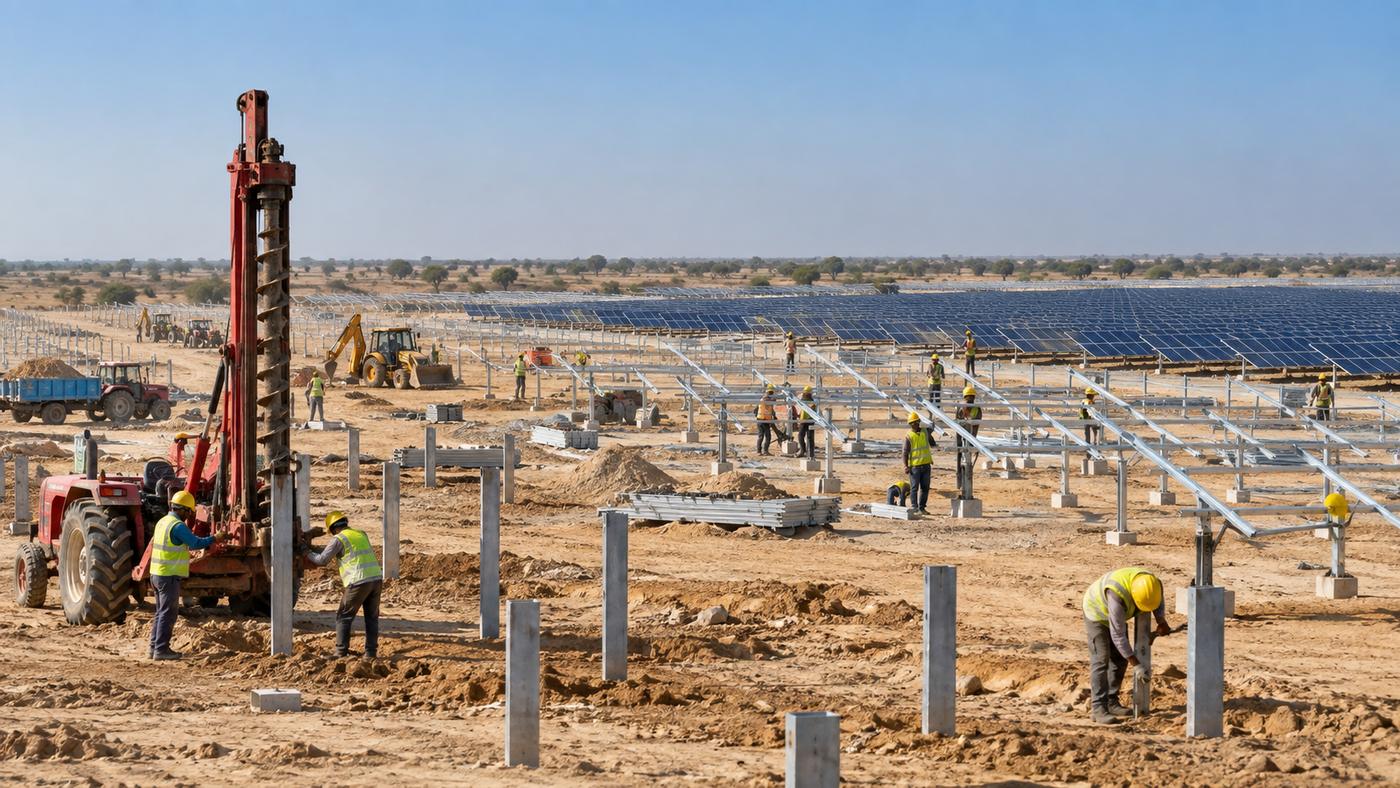
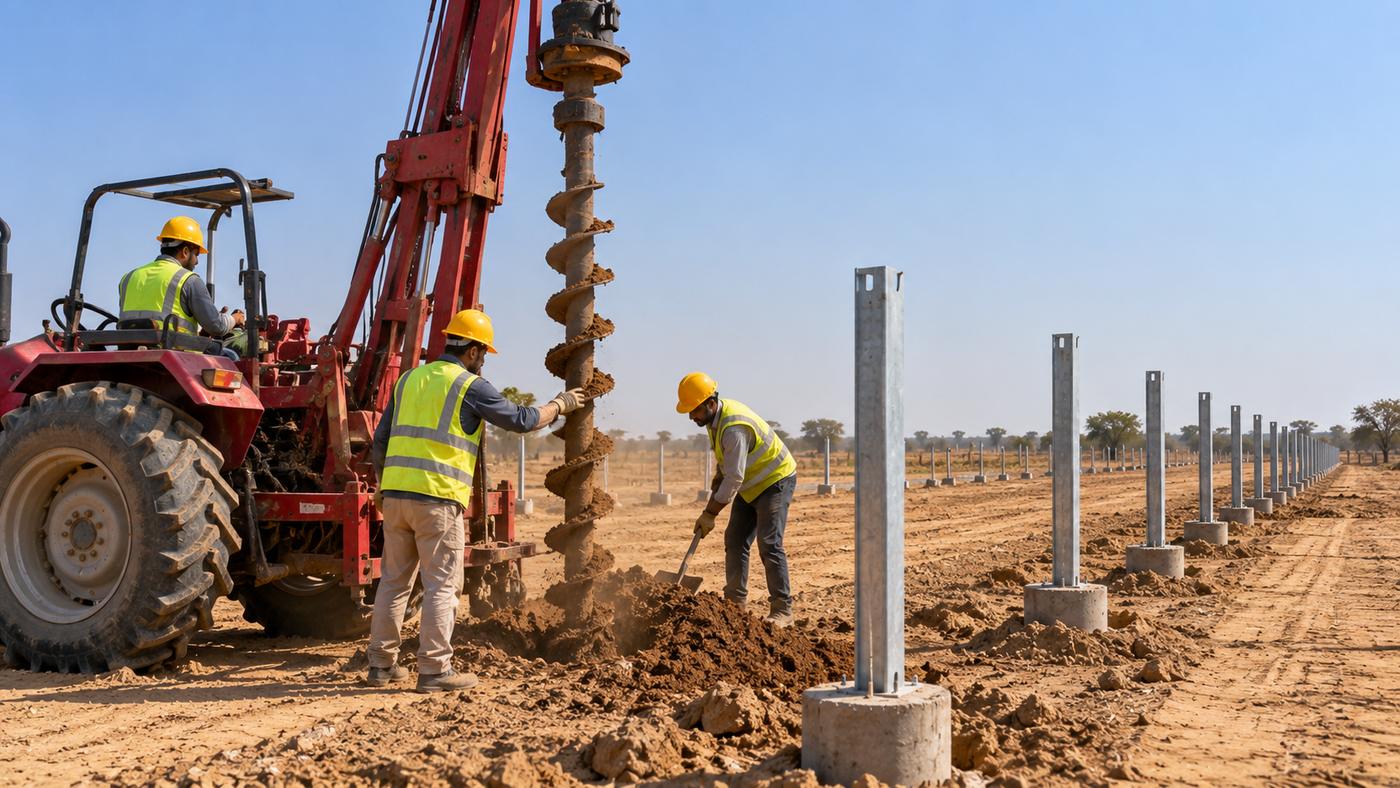
1. Civil and structural checks
- Pile positions and levels match the approved layout drawings
- Pile verticality and row alignment checked
- Concrete slump tested at the time of pouring, as per IS 1199 (Part 2):2018
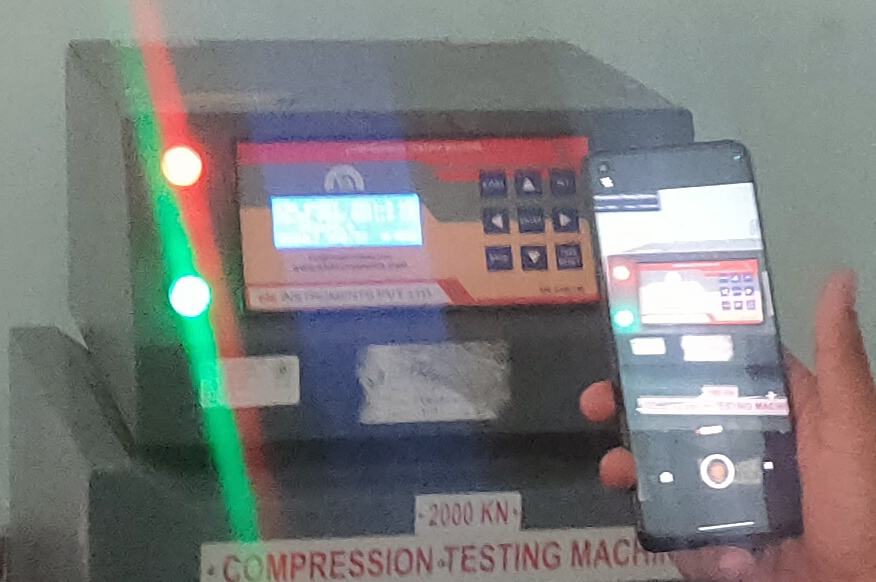
- Concrete cube results available, tested as per IS 516 (Part 1/Sec 1):2021 and accepted as per IS 456:2000
- Pile load test results available, as per IS 2911 (Part 4):2013
- Trenches backfilled and compacted, drains and roads clear
2. Mechanical checks
- Module mounting structures aligned to the design tilt and row spacing
- All structural bolts tightened to the torque chart and marked
- Galvanizing coating thickness spot-checked, as per IS 4759:1996 or the project specification
- Modules free from cracks, chips and hotspots, clamps at the specified torque
- No sharp edges or cables resting on structure edges
3. Electrical pre-commissioning tests
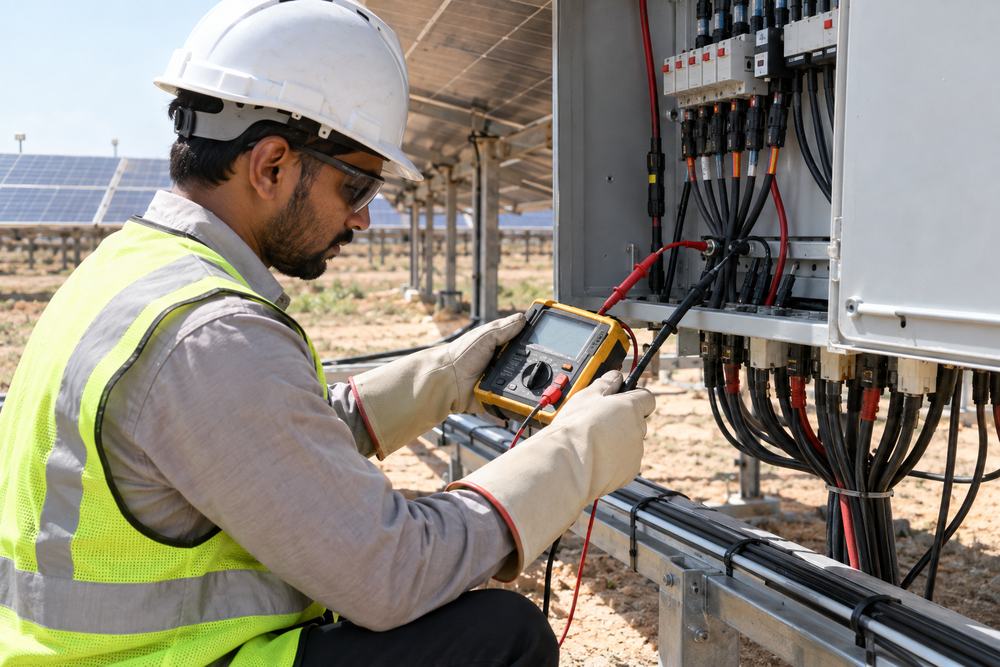
Most solar electrical tests follow IEC 62446-1, the international standard for testing, documentation and maintenance of grid-connected PV systems.
| Test | Why it is done | Common acceptance |
|---|---|---|
| Continuity of protective earthing | Confirms every structure and frame is bonded to earth | Continuous path on every bond |
| Polarity test | Reversed polarity can damage inverters | Correct polarity on every string |
| String open-circuit voltage (Voc) | Detects missing or faulty modules and wiring errors | Close to the expected, temperature-corrected value; strings in a group within about 5% |
| String current | Confirms each string is working under sunlight | Similar values across comparable strings |
| Insulation resistance | Detects damaged insulation and leakage to earth | Not below the IEC 62446-1 limit of 1 MΩ, or the higher value set by the project |
| Earth resistance | Safe path for fault current and lightning (IS 3043:2018) | Commonly below 1 ohm for the main earth grid |
| IV curve tracing | Full performance check of each string | Curve and power close to expected values |
| Infrared thermography | Finds hotspots and loose connections (IEC TS 62446-3) | Hotspots of about 10 °C or more above neighbouring areas investigated |
4. Inverter, transformer and SCADA checks
- Inverter settings, protection and alarms checked as per manufacturer procedure
- Monitoring and SCADA signals verified from each inverter and meter
- Protection relays and breakers tested before energisation
- Energy meter readings recorded at start-up
5. Documents to hand over
- Test reports for every civil, mechanical and electrical test
- As-built details and string layout
- Punch list with every point closed
- Equipment datasheets and warranty documents
See how we carry out each test, with photos, on our quality and safety page.
Frequently asked questions
What is pre-commissioning in a solar plant?
Pre-commissioning is the set of checks and tests done before a solar plant is energised and connected to the grid, such as insulation resistance, polarity, open-circuit voltage and earth resistance tests.
Which standard covers solar PV commissioning tests?
IEC 62446-1 is the international standard for testing, documentation and maintenance of grid-connected PV systems. Thermography follows IEC TS 62446-3. Project specifications may add further tests.
What is the minimum insulation resistance for solar strings?
IEC 62446-1 sets a minimum of 1 megaohm. Many utility-scale project specifications ask for a higher value, and the project value always applies.
Why is thermography done during commissioning?
A thermal camera shows hotspots from faulty cells, diodes or loose connections that other tests can miss, so they can be fixed before handover.