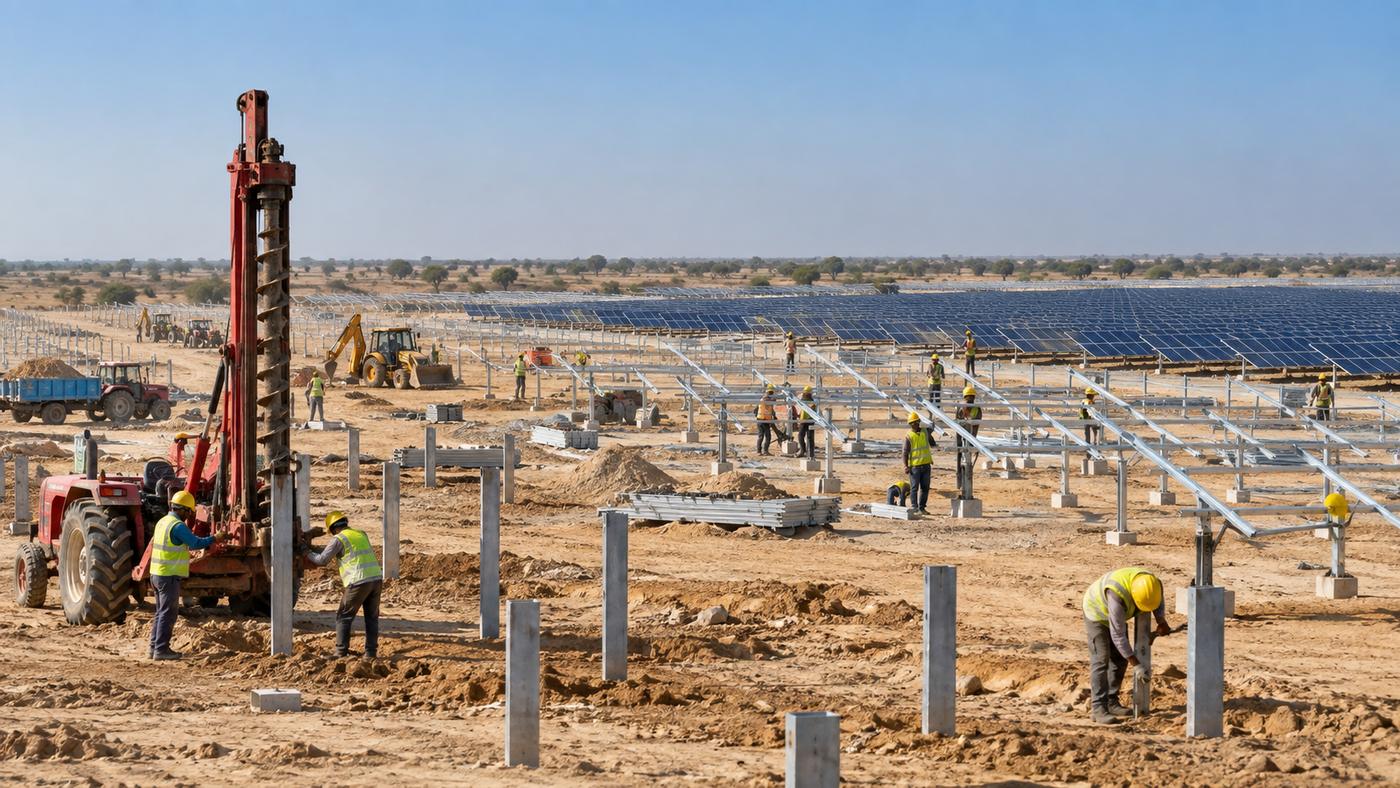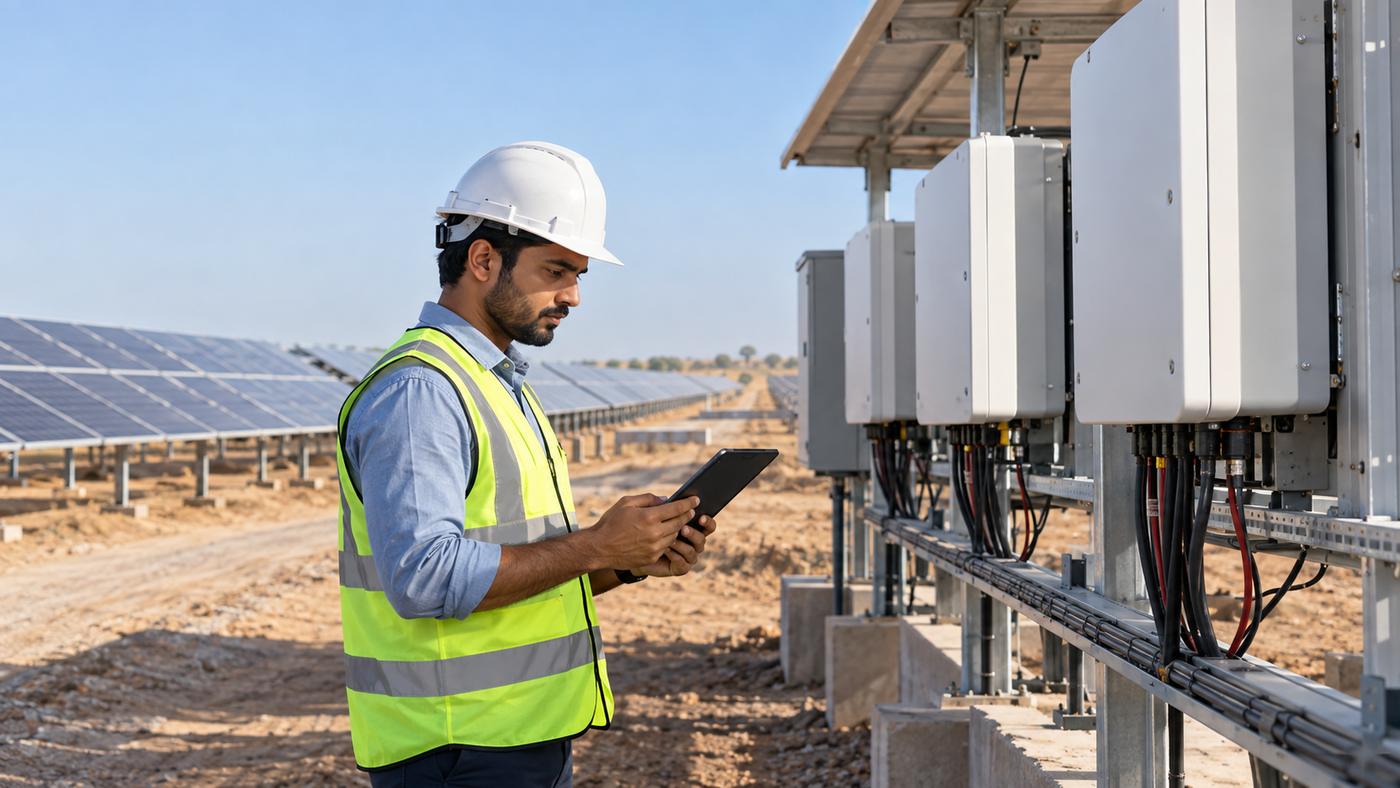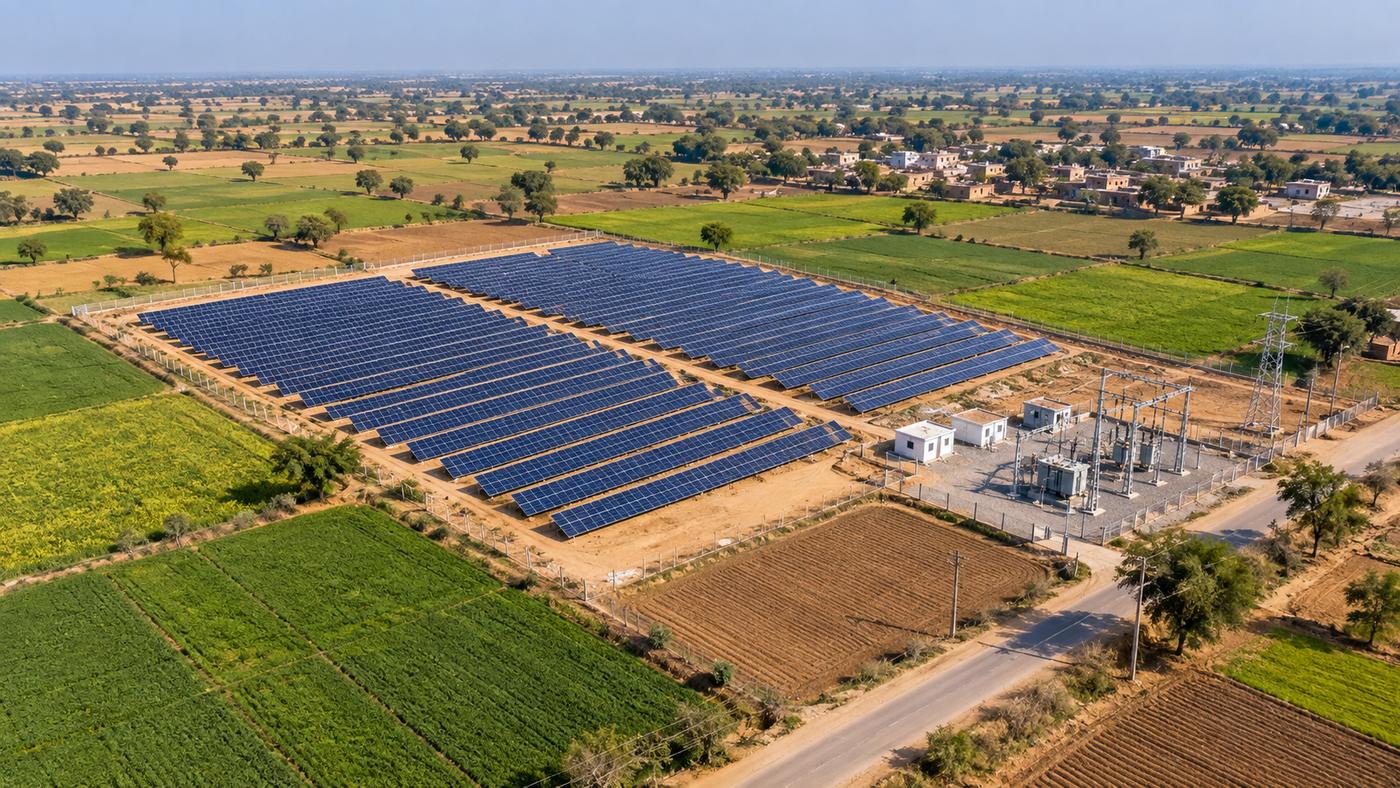
Solar Piling and Foundations: Methods, Tests and Common Mistakes
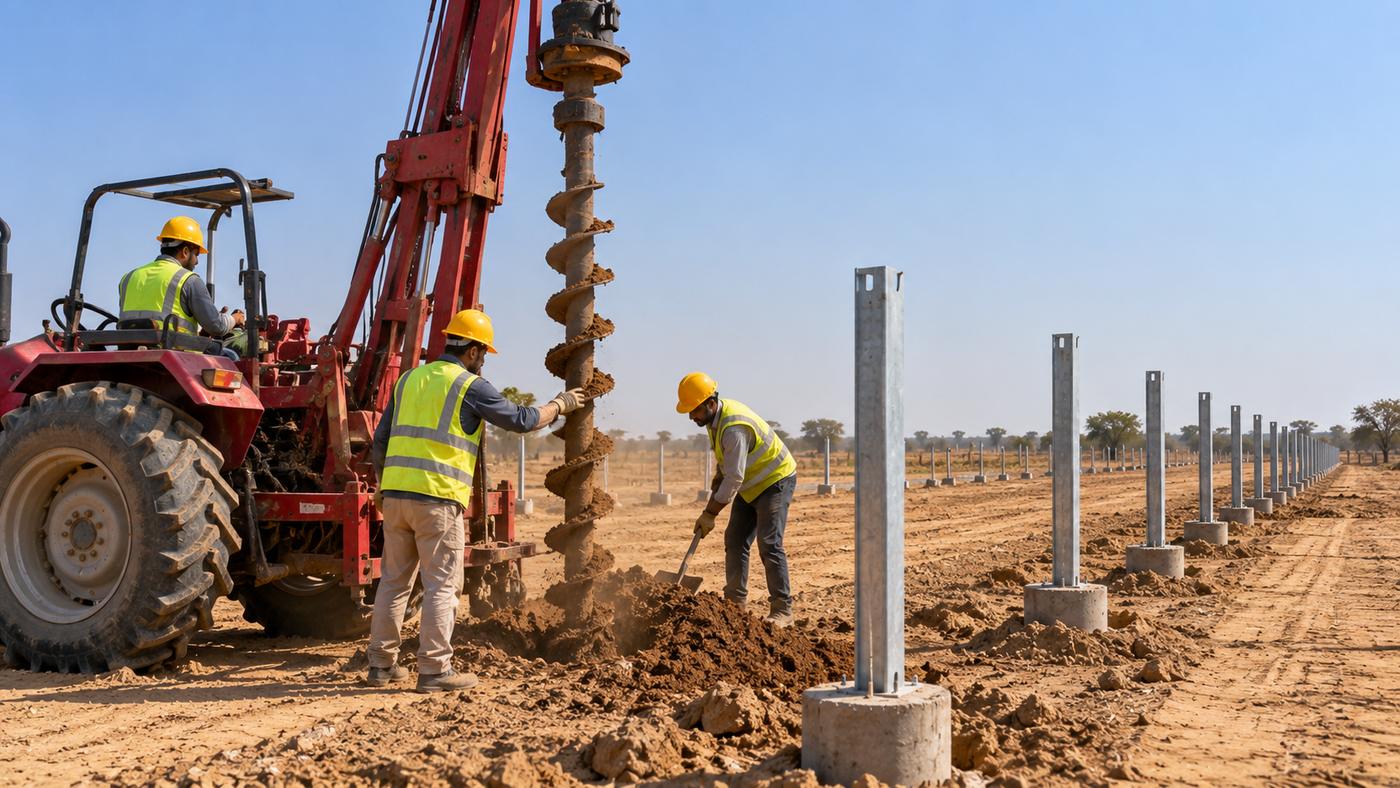
Piling is the first big civil activity on a solar site, and one of the most important. Every pile carries the weight of the structure and modules, and resists wind pulling the panels upward for the next 25 years. Mistakes in solar piling are expensive to fix once structures and modules are installed.
Common solar pile foundation methods
| Method | How it works | Where it suits |
|---|---|---|
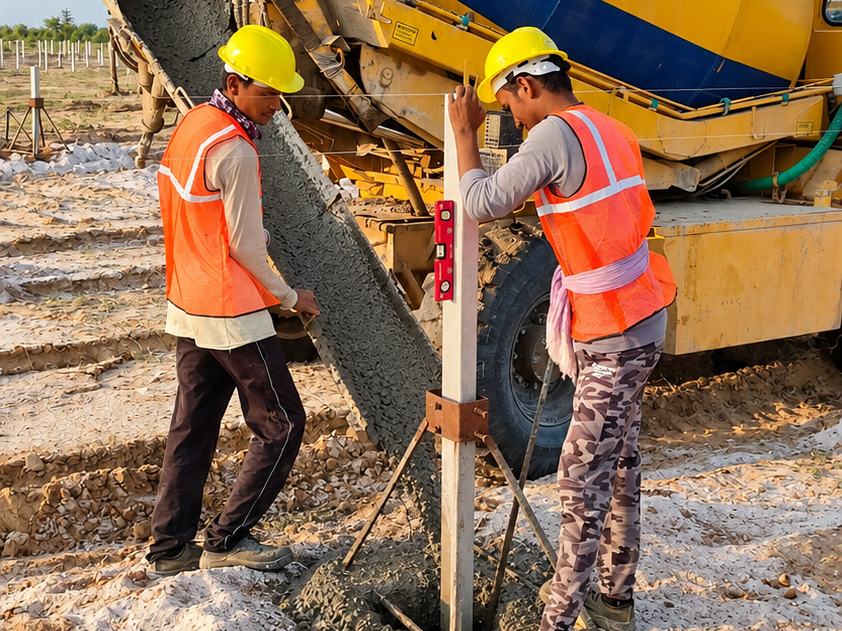
| Augered hole with concrete | A hole is drilled with an auger, a steel post is set to line and level, and concrete is poured around it | Most soil types; very common in India |
| Driven steel piles | Steel sections are rammed into the ground with a pile driver | Soils without large rock or boulders |
| Bored cast-in-situ concrete piles | A bored hole is reinforced and filled with concrete, with the structure fixed on top | Weak or variable soils, higher loads |
| Screw (helical) piles | Steel piles with helical plates are screwed into the ground | Soft soils, fast installation |
The right method is chosen by the designer based on soil investigation and pile load tests.
Tests before and during piling
Soil investigation
Soil investigation is done as per IS 1892:2021 (subsurface investigation for foundations), with the standard penetration test as per IS 2131:2025. The results decide pile type, depth and size. Soil resistivity values from the site are also used for the earthing design.
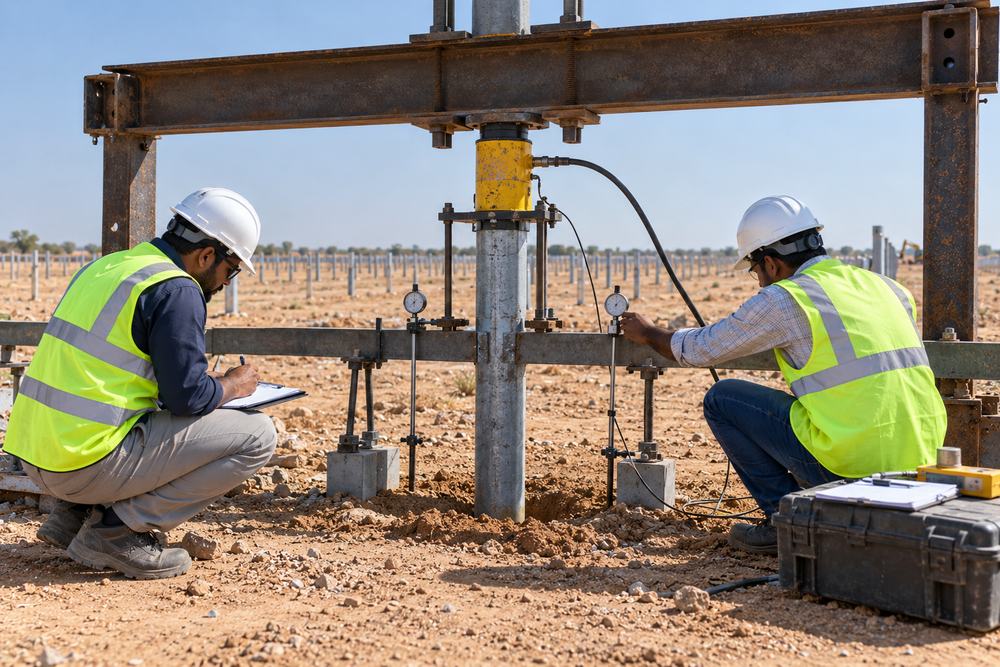
Pile load tests
Trial piles are tested as per IS 2911 (Part 4):2013, which covers vertical (compression), lateral and pull-out load tests. For solar plants, lateral and pull-out tests are especially important, because wind acting on the modules pushes and lifts the structures.
Concrete checks
- Slump test at the time of pouring, as per IS 1199 (Part 2):2018
- Cube tests at 7 and 28 days, as per IS 516 (Part 1/Sec 1):2021, with acceptance as per IS 456:2000
- Curing as per specification, especially in hot and dry weather
Galvanizing
Steel posts and piles are hot-dip galvanized to protect them from corrosion. Coating is checked as per IS 4759:1996 or the project specification.
Common solar piling mistakes
- Layout errors: piles marked off the drawing cause misaligned rows that cannot be fixed later.
- Poor verticality: leaning posts make structure erection slow and stress the steel.
- Short depth: piles not taken to design depth reduce pull-out resistance.
- Wrong concrete: concrete that is too wet or too dry leads to weak or honeycombed piles.
- Poor curing: concrete dried too fast in summer loses strength.
- No records: without test records, inspection becomes an argument instead of a check.
How good planning speeds up piling
Piling speed depends on machines and people as much as soil. Owning tractor-mounted augers, having a survey team marking ahead of the piling crew, and checking line and level before concrete is poured are what keep a solar project on schedule.
See how we handle survey, piling and foundations in our execution process, and the tests we follow on our quality and safety page.
Frequently asked questions
Which IS code covers pile load tests?
IS 2911 (Part 4):2013 covers load tests on piles, including vertical (compression), lateral and pull-out load tests.
Why are pull-out tests important for solar piles?
Wind acting on solar modules tries to lift the structures. Pull-out tests confirm that piles can resist this uplift safely.
Which IS code is used for soil investigation?
IS 1892:2021 is the code of practice for subsurface investigation for foundations. The standard penetration test is done as per IS 2131:2025.
What is the most common piling method for solar plants in India?
Augered holes with a steel post set in concrete are very common in India, along with driven steel piles where soil allows.